Cliques

Friday, February 1, 2013

What would happen if gummy bears met potassium chloride?

Gummy Bears


 Potassium chlorate

Well today we have an interesting experiment which is kind of "burn" the lab. Do not worry. The lab still there but it is in such a mess. Carbon dioxide gas here and there!

Today, those Form 1 till Form 5 members were joining us. We have a combined session for this experiment. Besides carrying out the experiment, we also have the responsibilities to take care of those small kids~ Members are grouped into 3 in one group. Its random combination among members.

Before we start doing anything

Lets us don't waste out time. Lets get started! 

Apparatus and materials that is needed:
-GUMMY BEARS (our main material. Not for us to eat)
-Potassium chlorate, KClO3
-Boiling tube
-Retort stand and clamp
-Bunsen burner

Two spoon of potassium chlorate is put in the boiling tube. Then, the boiling tube filled with potassium chlorate is clamp to the retort stand in 45 degrees. Then it is burn using Bunsen burner to melt the potassium chlorate. 

Boiling tube clamped in 45 degrees and it is Bunsen burner used to heat the potassium chlorate

Heating is continued until the potassium chlorate turn into molten state. Then the Bunsen burner is removed and its time to put GUMMY BEAR into the molten potassium chlorate. BOOM~ reaction occur.

 And you will see this

 Gummy bear burned

 The lab which is full of carbon dioxide released by the reaction

Explanation for the experiment:

Molten potassium chlorate is a strong oxidising agent that reacts violently with sugar containing gummy bear that have a lot of sugar in them.
A gummy bear is mostly sugar, which is easily oxidised by something like molten potassium chlorate.

Overall, it is a simple oxidation and reduction
C6H12O6 + 6O2 ---> 6CO2 + 6H2O

Carbon goes from an oxidation state of zero to +4 while oxygen O2 is reduced from zero to an oxidation state of -2. 

When heated, potassium chlorate break up to form potassium chloride and oxygen.

2KClO3 (s) ----> 2KCl (s) + 3O2 (g)

When mixed with sucrose, it causes the oxidation and reduction reaction that release carbon dioxide and water while precipitating potassium chloride salt.

C12H22O11 (s) + 3O2 (g) ---> 9C (s) +3CO2 (g) +11H2O (l)

That's all for the day. The lab were really filled with carbon dioxide due to the oxidation and reduction reaction. 

There will be more interesting experiments in the future. Stay tuned.


Shiuan Yih.


Sinking Smoke

This is the first experiment for 2013 which is on 17.1.2013. 

The person in-charged for today's activity is no other than our vice chairperson, Seah Wei Hon.


Do you ever see smoke sinking?  Here, take a look at it!


See. You can even pour it out like water. You have seen it so it is all? 


Nope. We are going to teach you guys how to make smoke sink! Continue reading~

Firstly, you need the main material that can create smoke which is the matches. Our main motive is to make smoke sink. So, mission cannot be completed without smoke. Now, we have matches but how to light it up? Of course we need Bunsen burner. Then we need a piece of aluminium foil to travel the smoke that will be released when we light up the matches to a container. Before we start burning the matches, the container (conical flask) is put in a refrigerator. 


This is a conical flask in case you wondering what it is

Let the walls of conical flask to be cool. While waiting it to be cool, lets prepare the matches. take around 6 matches and roll it up with aluminium foil. The end where the head of matches is places is fold. It is to make sure when we burn it, the smoke will not come out through there. Make sure there is a opening of the foil at the end with the tail of matches. 

Its time to take out the conical flask from the refrigerator. The rolled aluminium foil is out at the mouth of the conical flask. The head of the matches is facing upwards. Light up the Bunsen burner then burn the aluminium roll where the head of the matches were. Then you can see smoke coming out from the opening of the roll of aluminium foil into the conical flask. Then you can ready to pour out the smoke. It will flow like water out of the conical flask. 

You can watch the video below to get a better idea on what is happening.

Sinking smoke

So, now lets get your material and make the smoke sink!

The explanation behind this experiment:

The wall of the conical flask which is cool will cool the smoke. Therefore, make it heavier than air surrounding us. As we know cool object sinks and hot object rises. With this theory, the cool smoke sink. 

~Shiuan Yih~

Saturday, November 10, 2012

Fire Water Balloon

Its a simple experiment done on 9/8/2012.
This will be the last meeting of the year.

Since its a fire water balloon activity, we have: Balloon
                                                                      Candle 


Start it by filling the balloon with water. Almost half is enough. Light up the candle and start burning the balloon. You will be surprise that it will not burst!!


see this

Water have high specific heat capacity that can prevent the balloon from bursting. But continuously heating will also burst the balloon as the water temperature increases.
Carbon is formed at the bottom of the balloon where the part that it is heated.


Oxidation States of potassium permanganate and Whoosh bottle experiment


This is the first experiment carry out with the new peoples. We have done two experiments on 2/8/2012.

First experiment

Apparatus and materials: Sodium hydroxide, NaOH
                                      Sugar
                                      Water
                                      Weak solution of potassium permanganate

Sodium hydroxide is mixed with sugar in water . Add weak solution of potassium permanganate to the mixture. Observe the colour change~! It will change from purple to green then to yellow. 

Explanation: Manganese in KMnO4 is in oxidation state +7. In a solution of NaOH and sugar, Manganese is reduced to its +6 (green) and +4 (yellow) oxidation states.


Here is a video of the experiment

Second experiment

Apparatus and materials: Plastic bottle
                                      Alcohol
                                      Lighter

Procedure:
Firstly, the plastic bottle is rinsed with a little of alcohol. Make sure all the sides of the bottle is covered by alcohol. The, the alcohol is poured out. CAUTIONS: the alcohol must be removed from the bottle to prevent fire that cannot put out!!! Later, the bottle is squeezed around 20 times so that the air can enter the bottle. Bring the lighter to the top of bottle and see what happens!!!

Oxygen + fire = combustion

Video for a rough idea on what is happening

Shiuan Yih.

Thursday, November 8, 2012

Meet the newbies!!!

List of the new committee (2012/2013)


President:                      Beh Shiuan Yih
Vice President:              Seah Wei Hon
Secretary:                     Kong Choon Yung
Treasurer:                     Tan Chee Wei
Committe Members: 1) Teoh Boon Sian
                                2) Lim Pei Fong

Thanks for the trust of members gave to us.
We will
strive our best in maintaining this club as one of the best Form 6 club in MBSSKL~
GO FORWARD MBS!

Thursday, July 12, 2012

The Magic of Immersing Thread Into Ice

Well today we did have a very interesting experiment, some might think that this experiment is dull and way too simple, but when you really try it out, you will eventually realise that there is a lot of things to learn in science especially the fun way

The person in-charged for today's meeting was no other than Ong Meng Teck

So our aim today was to make sure that the thread goes through the ice slightly so that we can lift it

In order to achieve it, we use either Pressure concept or Reducing Melting point concept

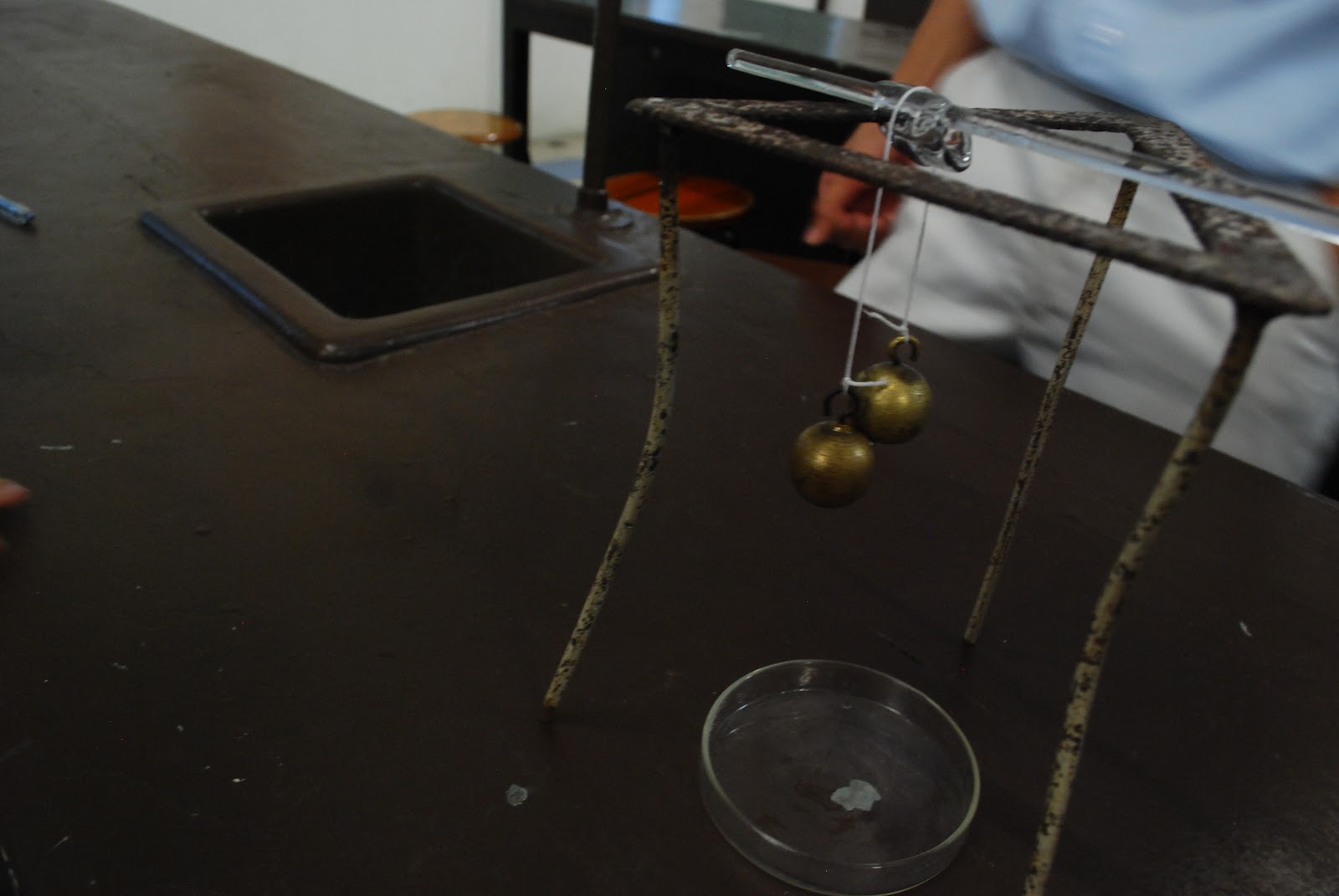
For the pressure concept, we used 2 pendulum bob and tie them together with a thread. Then this thread is rest upon the ice thus providing the pressure needed.

As for the the Reducing Melting point, we used salt which in this case we used Potassium Chloride. By placing the thread on the ice and then pouring some salt on the thread, the salt will cause a reduction in melting point of ice thus the thread will go through the ice easily. When the water on the ice dilutes, the melting point is then restored to it's original value thus freezing back slightly.


Enough of points, now picture time


Meng Teck explaining the procedure


Ice placed on Petri Dish


A great way to apply pressure


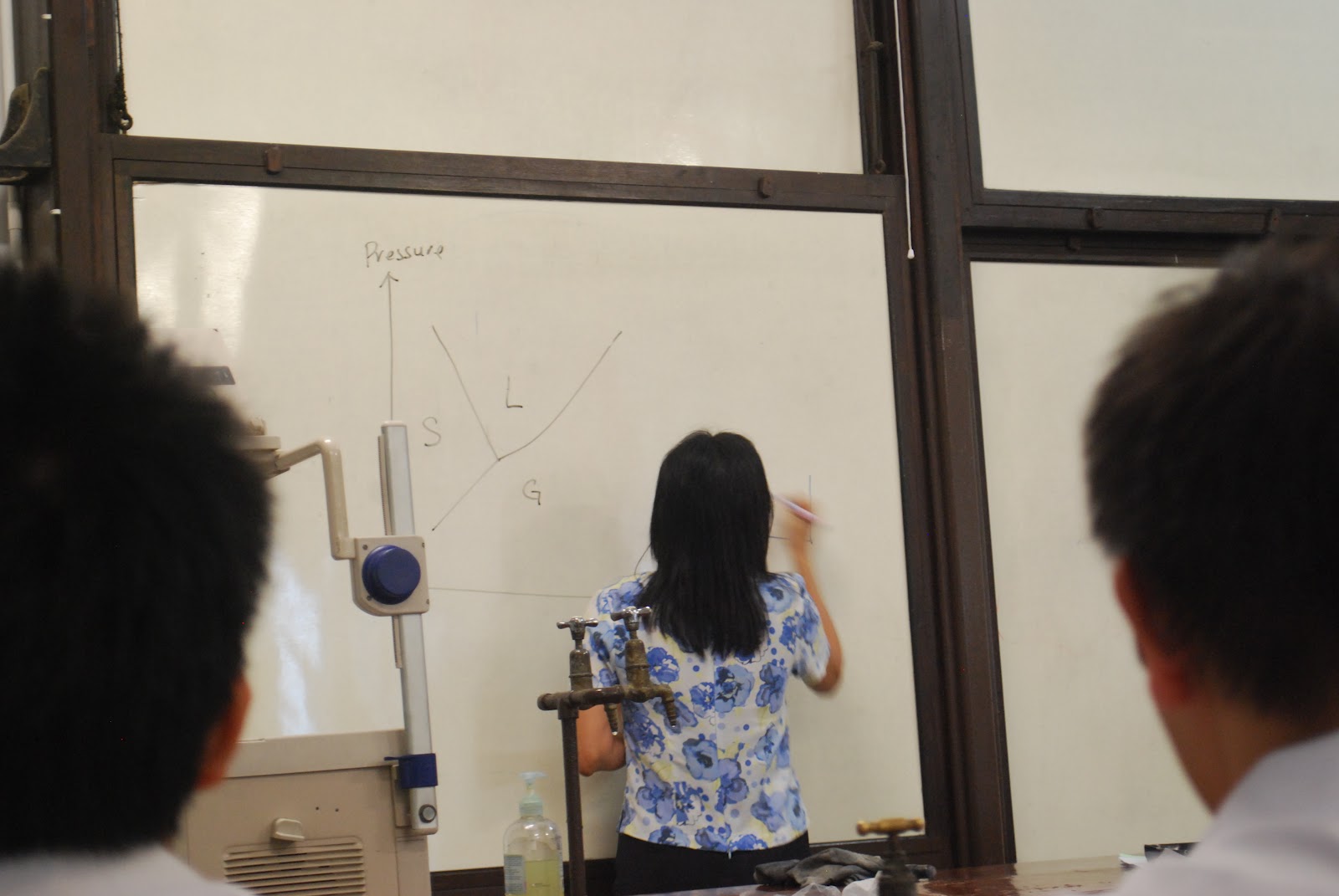
Our teacher advisor explaining the theory


There will be more experiments to come in the future!

Thursday, June 21, 2012

Smoke Bomb

Well we have long awaited for this experiment to clearly see the result of the smoke bomb experiment

So what we need?
1) Potassium Nitrate
2) Sugar

All we need to do is heat it up together in a ratio of 1:1 and once it turn caramel brown and melt, turn off the bunsen burner and stir it. Then put it onto an aluminium foil and let it cool down.

Upon doing that, we bring it to our school field and burn it. The result was awesome.

Unfortunately due to some circumstances, we do not have any media to upload for you to view. Our sincere apologies.